
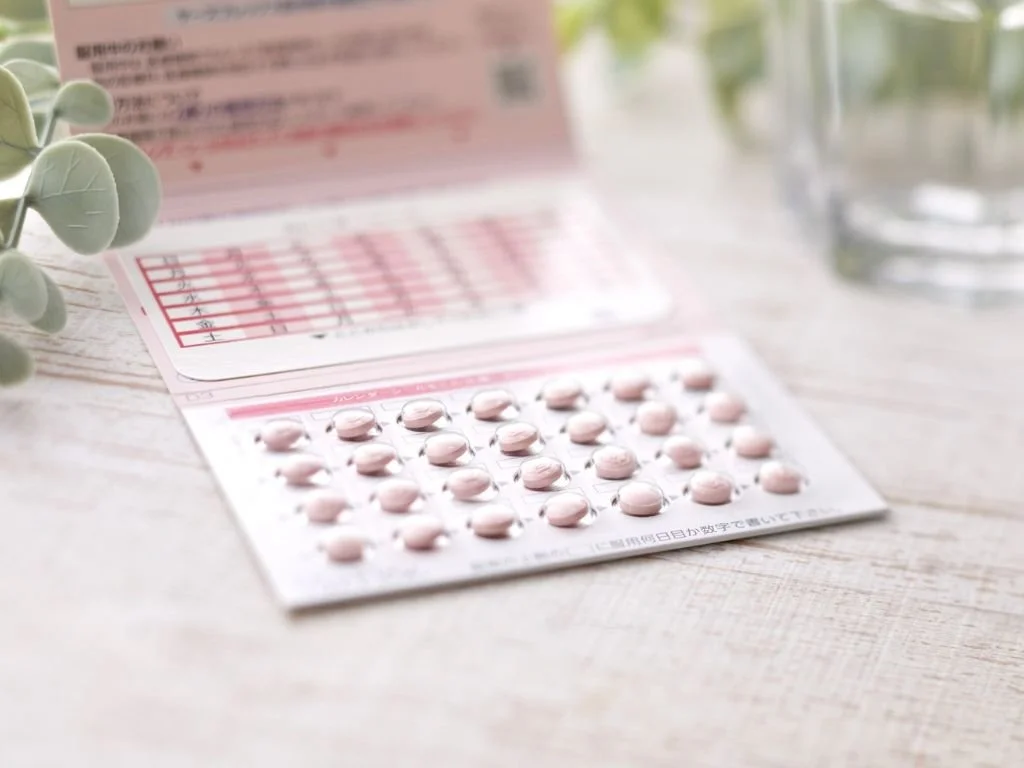
You deserve more than “just take the pill.”
For many women, hormonal birth control is prescribed quickly and routinely. It’s often presented as simple, safe and convenient. It regulates your cycle. It clears your skin. It prevents pregnancy.
But very few women are actually told what it does inside the body.
This article isn’t about fear.
It’s about understanding.
Because informed decisions require real information.
1. It Suppresses Ovulation
The primary mechanism of hormonal birth control is ovulation suppression.
Ovulation is controlled by communication between the brain and the ovaries. The hypothalamus releases GnRH, which signals the pituitary gland to produce FSH and LH. LH triggers ovulation.
Hormonal contraceptives send a steady signal that mimics the presence of pregnancy-level hormones. As a result:
• The brain reduces FSH
• The LH surge is blocked
• Ovulation does not occur
No ovulation means no egg release.
But ovulation is not just about pregnancy.
Ovulation influences progesterone production, mood stability, metabolism, libido, bone health and long-term hormone balance. When ovulation is suppressed, that natural rhythm is altered.
2. It Replaces Natural Hormones with Synthetic Ones
Hormonal contraceptives contain synthetic estrogen and/or progestin.
These are not identical to the hormones your body naturally produces.
They bind to hormone receptors differently.
They are metabolised differently by the liver.
They influence hormone-binding proteins such as SHBG (sex hormone-binding globulin).
Instead of your body producing estrogen and progesterone in a cyclical pattern, you receive a steady external hormone input.
This creates a stable hormonal environment, but it is not the same as a natural cycle.
3. It Thickens Cervical Mucus and Thins the Uterine Lining
Beyond ovulation suppression, hormonal birth control also:
• Thickens cervical mucus to prevent sperm movement
• Thins the endometrial lining to reduce the likelihood of implantation
These secondary mechanisms increase contraceptive effectiveness.
This is why hormonal birth control is considered highly reliable when taken consistently.
4. The “Period” on the Pill Is Not a True Period
During placebo week, many women experience bleeding.
This is not a natural menstrual period.
It is called a withdrawal bleed.
It occurs because synthetic hormones are temporarily withdrawn, triggering shedding of the uterine lining.
There is no ovulation preceding it.
There is no natural luteal phase.
Understanding this distinction matters because many women believe they are still cycling normally while on the pill. Physiologically, they are not.
5. It Alters the Body’s Hormonal Rhythm
The natural menstrual cycle is rhythmic.
Estrogen rises.
Ovulation occurs.
Progesterone rises.
Hormones fall.
This rhythm influences:
• Mood
• Motivation
• Energy levels
• Cognitive clarity
• Libido
• Stress resilience
Hormonal birth control flattens that rhythm.
For some women, this provides relief from painful or heavy cycles. For others, it can feel like emotional blunting or disconnection.
Every body responds differently.
Who Might Benefit — and Who Should Be Cautious
Balanced conversations build trust.
Hormonal birth control may be beneficial for:
• Severe endometriosis
• Debilitating menstrual pain
• Heavy bleeding
• Certain PCOS presentations
However, caution is important in women with:
• Migraine with aura
• History of blood clots
• Smoking over age 35
• Strong family history of hormone-sensitive cancers
This is why personalised risk assessment matters.
This Is About Informed Choice
Hormonal birth control is not inherently “bad.”
But it is not neutral.
It suppresses ovulation.
It alters hormonal communication.
It replaces natural hormones with synthetic ones.
And that deserves to be explained clearly.
In Part 2, we explore how hormonal birth control may influence nutrients, libido, gut health, stress regulation and long-term health outcomes.
You deserve full context.
Not just a prescription.
Subscribe to my newsletter for deeper educational breakdowns, and follow along as we continue this series.